The Evolving Landscape of Parenthood: Navigating the Complexities of Choice and Identity
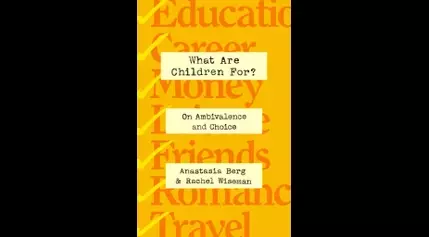
In the United States, birth rates have been on a steady decline since the 1970s, with growing numbers of women prioritizing education and careers over childbearing. Anastasia Berg and Rachel Wiseman's new book, "What Are Children For? On Ambivalence and Choice," explores the historical, societal, and financial factors that have led to this shift in attitudes towards parenthood. The Gazette sat down with Berg, an assistant professor of philosophy at the University of California, Irvine, to delve deeper into the philosophical and practical considerations surrounding this pivotal decision.Redefining the Meaning of Motherhood in the 21st Century
The Decline of "Maternal Optimism"
Berg explains that the book aims to address the various concerns, anxieties, and lines of reasoning that people encounter when considering whether to have children. These include material concerns, such as the difficulty of finding suitable partners, as well as ethical concerns, like the impact of climate change. However, the book also explores the unique challenges that women face in reconciling the demands of motherhood with their desire for personal fulfillment and empowerment.The Feminist Debate on Motherhood
Berg notes that there has been a long-standing debate within feminist theory and practice regarding the role of motherhood in women's lives. In the 1960s through the 1980s, there was a clear divide between anti-motherhood camps and those who sought to reform the institution and practices of motherhood. Ultimately, the consensus emerged that the choice to have children should be a woman's alone, and celebrating the virtues of motherhood became less welcome in feminist discourse.The Shift from Obligation to Choice
Berg explains that the radical change in recent decades is the way we now view having children. Whereas it was once seen as an essential part of the generational framework of human life, it is now often considered a "project" among many other life choices. The opportunity costs of parenthood have become more prominent, and there is a growing narrative that it can be "life-ending" for one's identity and personal pursuits.The Paradox of Parenthood
Berg acknowledges the paradox that parenthood can be both wonderful and terrible. She encourages people to approach the decision with a more nuanced perspective, recognizing that there is more pain, difficulty, and challenge than there is pure joy. By shifting away from a simple pros and cons list, individuals can instead consider the shape they want their lives to take and the kind of contribution they wish to make to the human experience.Navigating the "Standard of Readiness"
Berg argues that the societal expectations and "milestones" that people feel they must achieve before considering parenthood have become a significant obstacle. The pressure to be financially, professionally, and romantically "ready" can often result in people delaying the decision until it's too late, particularly for women. She suggests that this "standard of readiness" is a moving target that contributes to the complexity of the conversation around parenthood.Embracing the Continuity of Identity
Berg challenges the common perception that having children will result in a complete transformation or "rupture" of one's identity. She argues that this narrative can make the decision to have children much more anxiety-provoking. Instead, she encourages people to view parenthood as more continuous with their existing lives, rather than a complete identity shift.Advice for Those Grappling with the Decision
Berg offers two key pieces of advice for those considering whether to have children. First, she encourages people to engage with the question of parenthood more openly and frequently, rather than waiting until they are deeply committed in a relationship. Second, she suggests that individuals should approach the decision not through a simple pros and cons list, but by considering the shape they want their lives to take and the kind of contribution they wish to make to the human experience.